


 29.09.2026
 4 min read
Owners of residential and commercial real estate who do not have an officially confirmed source of income have come under increased attention from fiscal authorities. This is not a one-time check, but a systematic and systematic effort to bring citizens' incomes out of the "shadow." The supervisors are looking at tens of thousands of able-bodied people who own movable and immovable property, but do not declare their income.
The results of previous periods show the effectiveness of this approach. Thousands of citizens who were previously considered unemployed were forced to officially declare their incomes. This made it possible to additionally attract significant amounts of taxes and insurance premiums to the budget. Experts examined what tools the tax authorities use to identify unscrupulous taxpayers.
**Who is at risk**
First of all, the attention of tax authorities is focused on individuals — owners of residential and commercial real estate, whose official incomes are not comparable to the volume of property they own. Conventionally, such owners can be divided into two categories.
The first is completely informal landlords. They rent apartments, rooms, apartments, offices, warehouses, shops or parking spaces without filing declarations, registering individual entrepreneurship or self-employed status. In such cases, payments are often made in cash or by transfers to personal bank cards.
The second category is the so—called "light gray" owners. They have formally legalized their activities, but they only show a portion of their income. For example, the contract specifies a reduced rental rate, and the remaining amount is transferred in cash or by verbal agreement or a system of offsets.
For regulatory authorities, this group may be more transparent: data on real estate, the status of a self-employed or entrepreneur, declarations and registered objects are already contained in government information systems. All that remains is to compare the official information with the actual economy of the facility.
The most notable cases include owners of several apartments and apartments in new residential complexes, investors purchasing real estate for subsequent rental, as well as owners of premises on the ground floors of houses, in shopping and office centers. In the case of renting a commercial facility by a legal entity or an entrepreneur, the tax service usually has more opportunities for verification. Contracts, acts, payment orders and accounting statements of the tenant allow you to compare the actual payments with the declarations of the owner, an individual. If discrepancies are identified, additional taxes on personal income, penalties and fines for previous periods may be charged.
With significant volumes and regular nature of operations, regulatory authorities may raise the issue of signs of entrepreneurial activity and the need to pay insurance premiums.
**How the procedure is built**
First, the owner can receive a notification in the taxpayer's personal account or a letter with a proposal to clarify the source of income or voluntarily resolve the situation. The message may contain information about the presence of several real estate objects in the absence of data on income from their use. The citizen will be reminded of the need to pay taxes on rental income and will be asked to file a declaration for past periods or apply for a suitable tax status.
If there is no answer or the information raises additional questions, it is possible to call the commission on the legalization of the tax base. At such a meeting, the taxpayer may be provided with the information available to the department: a list of facilities, traces of advertisements, information about contracts, contracts or individual financial transactions. Voluntary settlement usually reduces the risks of more serious claims and sanctions.
Experts admit that it's not an easy task to prove income concealment, but today there is a request to expose gray landlords. It is possible to prove the fact of receiving money if there is a witness who agrees to confirm the transfer of funds, but this is not always the case. The favorite cover for entrepreneurial activity remains the alleged repayment of debt.
**Digital footprints and witness statements**
Open digital footprints are becoming an additional source of data for the tax service. Housing and premises rental ads on real estate services allow you to compare an object with a specific owner by address, layout, photos, and other characteristics. After that, it can be checked whether the owner of the property reflects rental income in the declaration, the application for the self-employed, or the entrepreneur's reports. A similar approach is applied to daily rentals through online services and aggregators. Special attention is drawn to facilities with regular change of tenants and signs of permanent commercial operation. Indirect information about the delivery of an object may also appear from management companies or homeowners' associations.
The tax authorities have plenty of tools for both soft and hard impact. Inspectors can call any individual for questioning, such as neighbors or tenants of a rented apartment. Their testimony may well become the basis for additional charges. The tax authority may also request written explanations about the source of income from the taxpayer himself.
However, there is a serious problem here: many such requests, like subpoenas for questioning, come either by mail or to the taxpayer's personal account. Citizens often do not live at the registration address and do not check their personal account regularly. Therefore, a person may not even find out that they have been asked for something and that there is some kind of activity.
In addition, as part of an already open tax audit, the inspectorate may request information from the bank on the flow of funds on an individual's accounts. Information can also be targeted — from offended neighbors, ex-spouses, quarreling partners. Accounts are not frozen at the verification stage, this happens after the taxpayer is charged additional taxes, an audit report is issued and it turns into a decision. This is a rather lengthy process.
At the same time, the tax authority aims not to issue an inspection report, but to force the taxpayer to declare income and pay taxes on his own. If the tax is not paid after filing the declaration, and the payment requirements are ignored, the moment of account blocking may indeed come.
Read also:

17.09.2026
What the old house at 75 Suvorova Street hides: the history of the Rostov apartment building
The old Rostov houses have one special feature: from the outside they tell about architecture, but inside they tell about people. One of these addresses is 75 Suvorova Street in the very center of Rostov-on-Don.
Read article

20.10.2026
the State Duma proposed to raise the tax deduction limit fourfold
The State Duma Committee on Construction and Housing and Communal Services has taken the initiative to increase the maximum amount of property tax deduction when buying an apartment from the current 2 million to 8 million rubles. The main argument of the parliamentarians is simple: the current limit was set more than ten years ago and has long been divorced from real prices in the real estate market.
Read article
06.10.2026
Age, cancellation, taxes: what you need to know about gifting
A gift agreement is an agreement under which one party transfers property to another party free of charge. If we are talking about real estate, the agreement between individuals must be certified by a notary, and the transfer of ownership rights is registered in Rosreestr. However, this transaction has important nuances that both the donor and the recipient should take into account.
Read article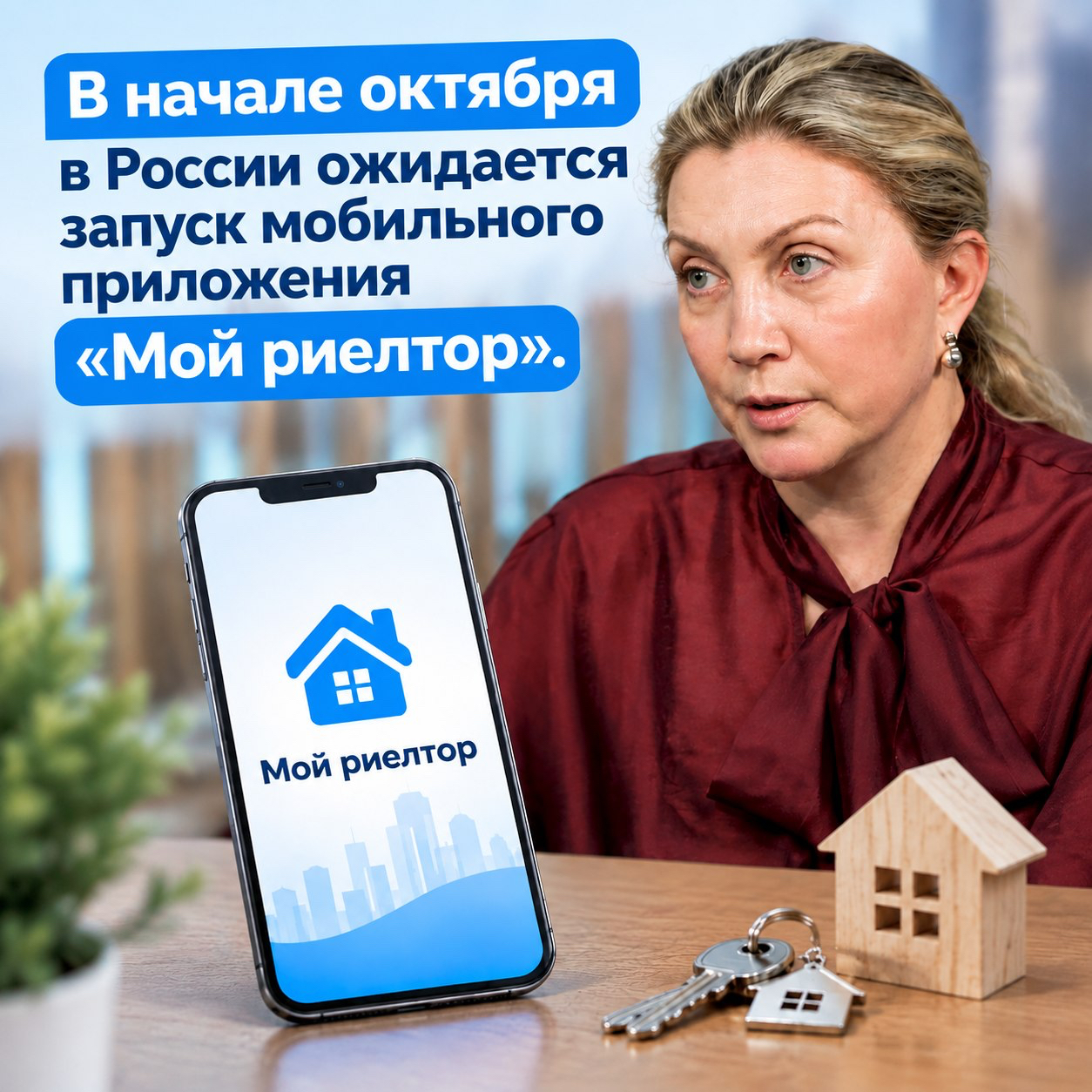
24.09.2026
My real estate agent. In Russia, they are launching an app to protect against scammers in the real estate market.
The real estate market is traditionally considered one of the most complex and risky sectors for the average citizen. History knows many cases where, in the pursuit of square meters, people lost their savings, becoming victims of unscrupulous intermediaries or outright fraudsters. However, as early as the beginning of October, an event will take place in Russia that promises to radically change the rules of the game. The launch of the mobile app “My Realtor” is expected — a service designed to become the main tool for ensuring safety when conducting real estate transactions.
Read article


